When Reward becomes the Relationship…..
What happens when every interaction with our dogs becomes a transaction?
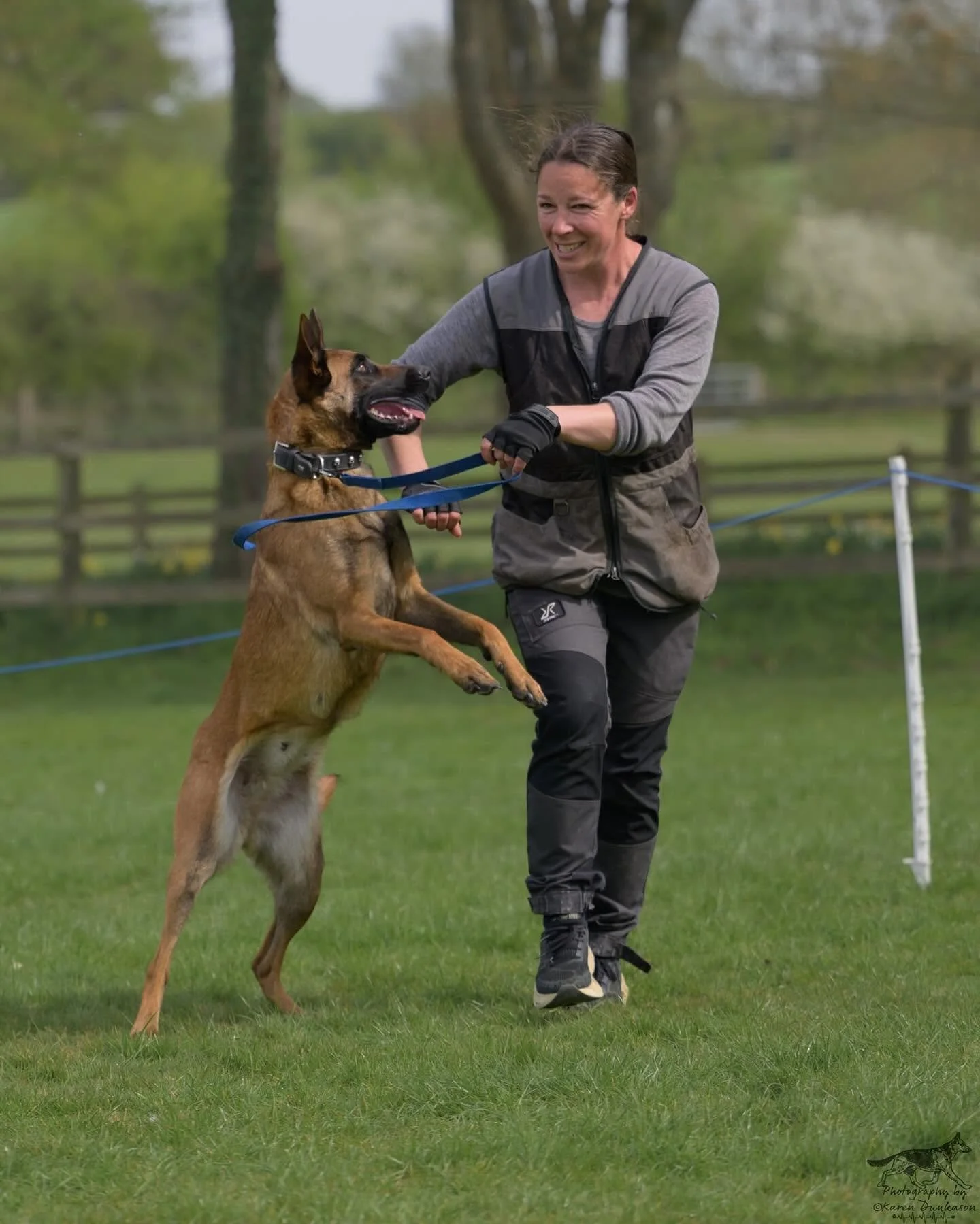
Photography: Karen Dunkason
When your dog looks at you, what are they looking for?
Are they seeking communication with you? Are they checking in because something has changed in the environment? Are they looking for information, reassurance, direction or simply a shared moment?
Or are they looking through you, towards the food or toy they have learned to expect?
It is a question I think is worth asking.
Modern dog training has become extremely good at reinforcement. We understand how effectively food and toys can be used to create behaviour, build motivation and make learning enjoyable. We can mark tiny moments of behaviour with extraordinary precision and reinforce them immediately.
These are valuable skills, and reward is an enormously useful training tool.
But somewhere along the way, I wonder whether we have begun to confuse the ability to produce behaviour quickly with the development of a meaningful relationship with the dog in front of us.
They are not necessarily the same thing.
We have become very good at creating behaviour
There is an increasing tendency within dog training to reward almost everything we like.
The dog looks at us… reward.
The dog walks beside us… reward.
The dog chooses not to react to something… reward.
The dog settles… reward.
The dog comes when called… reward.
The dog checks in again… reward.
From a purely behavioural perspective, the logic is understandable. Behaviour that is reinforced is more likely to occur again.
And initially, this can work extremely well.
The problem is not that the dog learns.
The question is what else is the dog learning at the same time?
If every interaction between dog and handler predicts the arrival of something the dog wants, it is worth considering what becomes significant to the dog.
Is it the interaction itself?
Or is the handler gradually becoming the mechanism through which reinforcement is delivered?
There is an important difference between a dog looking at us and a dog looking through us towards what it believes we are about to produce.
Behaviourally, those two things can look remarkably similar.
Relationally, I think they can be very different.
Reward is not the problem
I want to be very clear about this because it would be easy to interpret this argument as being opposed to food or toy rewards.
I am not.
I use both extensively.
Within my own dog sport training, reward is enormously important. But wherever possible, I don't want reward to be the thing that creates the behaviour or emotional state I am looking for.
I try to create behaviour, activity and emotion through relationship and communication first. I want the dog to respond to me, to my own activity, intention and emotion and to begin to mirror and engage with what I bring to the interaction. When I see an increment towards the behaviour or emotional state I want, I then use the most appropriate reward to recognise it and intensify it.
Food tends to lend itself to more thoughtful work. I can use it to mark success, reward developing behaviour and reinforce activity while maintaining thought and precision. Toys have a different emotional quality and are particularly valuable when I want to reward and amplify power, intensity, interaction and motivation.
The distinction matters to me. I am not trying to produce those qualities simply by presenting something the dog wants. I want them to begin within the interaction between us, and then use reward to strengthen what is already emerging.
I spend a considerable amount of time building meaning around reward and closely interlinking it with relationship. Reward in my training is never intended to be a simple transaction… you give me this behaviour and I give you that. At its best, reward becomes an extension of the relationship itself.
I want reward to have purpose.
I want it to enhance the work we are doing together rather than become the currency underlying our entire relationship.
For me, reward exists within a context. It isn't simply something that falls out of me every time my dog does something I approve of.
Learning and living are not the same thing
I think this distinction becomes particularly important when we separate teaching a dog from living with a dog.
If I am teaching a young dog something it does not yet understand, reward can be incredibly useful. It helps me communicate, can make the correct answer obvious and can create enthusiasm for learning and encourage the dog to experiment.
It can also help an inexperienced handler recognise and reinforce the moments they want.
But my destination is not a relationship in which every ordinary act of cooperation requires payment indefinitely.
My own dogs are not given food or toys for ordinary domestic behaviour.
If I call them to me in everyday life, I don't reach into my pocket. I engage with them and show my approval in a heartfelt, meaningful way. They are looking for this.
If I ask them to wait, move somewhere, get into the van, come away from something there isn't a reward waiting at the end of it.
They understand how we live together.
There is a history of communication between us. There is clarity. There are boundaries. There is trust.
And there is relationship.
I think this allows our relationship to contain something considerably richer than an endless series of transactions.
When the handler becomes a vending machine
There is an uncomfortable question here that I think dog trainers should be willing to consider.
What happens when the handler becomes primarily valuable because they predict resources?
We can create dogs that appear enormously attentive. They stare at us, follow us, repeatedly offer behaviours and check in constantly.
From the outside, that can look like an extraordinary relationship.
But what happens if the food disappears?
What happens if the toy doesn't arrive?
What happens when the dog wants something in the environment considerably more than it wants what we have?
And perhaps more importantly…. what is left between us when there is nothing available to give?
That question interests me far more than whether I can create another ten repetitions of eye contact with a handful of food.
I want my dogs to understand that communication from me matters independently of whether it predicts immediate payment.
Preserving the value of reward
There is another reason I don't want food and toys woven indiscriminately through every interaction with my dogs.
I value them.
Particularly within dog sport, I want rewards to retain meaning.
I want the appearance of a toy to matter. I want games with me to carry emotional significance. I want reward to contribute to the intensity and expectation surrounding our training.
If the same resources become the background currency of ordinary life, I risk changing their significance.
This does not mean reward needs to be artificially withheld or that deprivation somehow creates relationship.
It means I am deliberate about where, why and how I use it.
I am interested not simply in whether something reinforces behaviour, but in what role it plays within the larger picture I am building with the dog.
What replaces constant payment?
This is perhaps the most important part.
Because if the answer to “don't reward everything” is simply to remove reinforcement without replacing it with anything meaningful, we haven't improved the training.
The answer isn't less communication.
It is more.
The dog needs clarity. They need to understand what our words and actions mean and to have consistency in the communication that exists between us.
They need experience of succeeding with us, being guided by us, playing with us, navigating difficulty with us and discovering that the information we provide is useful.
Over time, thousands of those interactions create history.
And history creates relationship. An increasing ability to read one another, understand one another and communicate with increasing subtlety.
Relationship isn't something mystical that removes the need for training.
Nor do I believe that loving a dog means it should automatically want to do whatever we ask.
Relationship is something we build through the way we live and work with the dog.
Reward can absolutely be part of that.
It simply doesn't have to be all of it.
This isn't about taking the food away
I would be particularly cautious about an inexperienced handler reading this and deciding tomorrow to stop rewarding their dog.
That isn't the point.
If food and reward are helping you communicate clearly, build motivation, teach new behaviour or reinforce good choices while you develop your own timing and handling skills, use them.
The question isn't:
“Should I reward my dog?”
The better question is:
“What am I trying to build?”
Because training tools should help us travel towards a destination.
They shouldn't necessarily become the destination themselves.
As the dog's understanding grows and the relationship develops, I think we should continually examine what role reinforcement is playing and whether we are still using it deliberately or simply because we have become afraid of what might happen without it.
The destination matters
I don't want dogs that cooperate with me because I have successfully maintained the highest rate of payment.
I want dogs that understand me.
I want dogs that communicate with me.
I want dogs that enjoy working with me and dogs for whom the things we do together carry value.
I want food and toys to remain powerful tools that I can use deliberately when they serve the work we are doing.
But I also want there to be something underneath all of that.
Something that remains when my pockets are empty.
Because ultimately, not every interaction needs to become a transaction.
Sometimes the dog should look at us because the interaction itself matters.
Because there is history between us.
Because our communication has meaning.
Because we have become relevant to one another.
So perhaps the question isn't simply how often we should reward our dogs.
Perhaps the more interesting question is the one we started with.
When your dog looks at you, what are they looking for?