Emotional Communication in Training
There’s a tendency in dog training to reduce everything down to mechanics.
Cues. Markers. Rewards. Timing.
And while those things matter, they’re not the whole picture.
Because dogs aren’t just responding to what you do.
They’re responding to how you are.
A dog doesn’t experience training as a sequence of steps.
They experience it as an interaction.
An atmosphere.
A feeling.
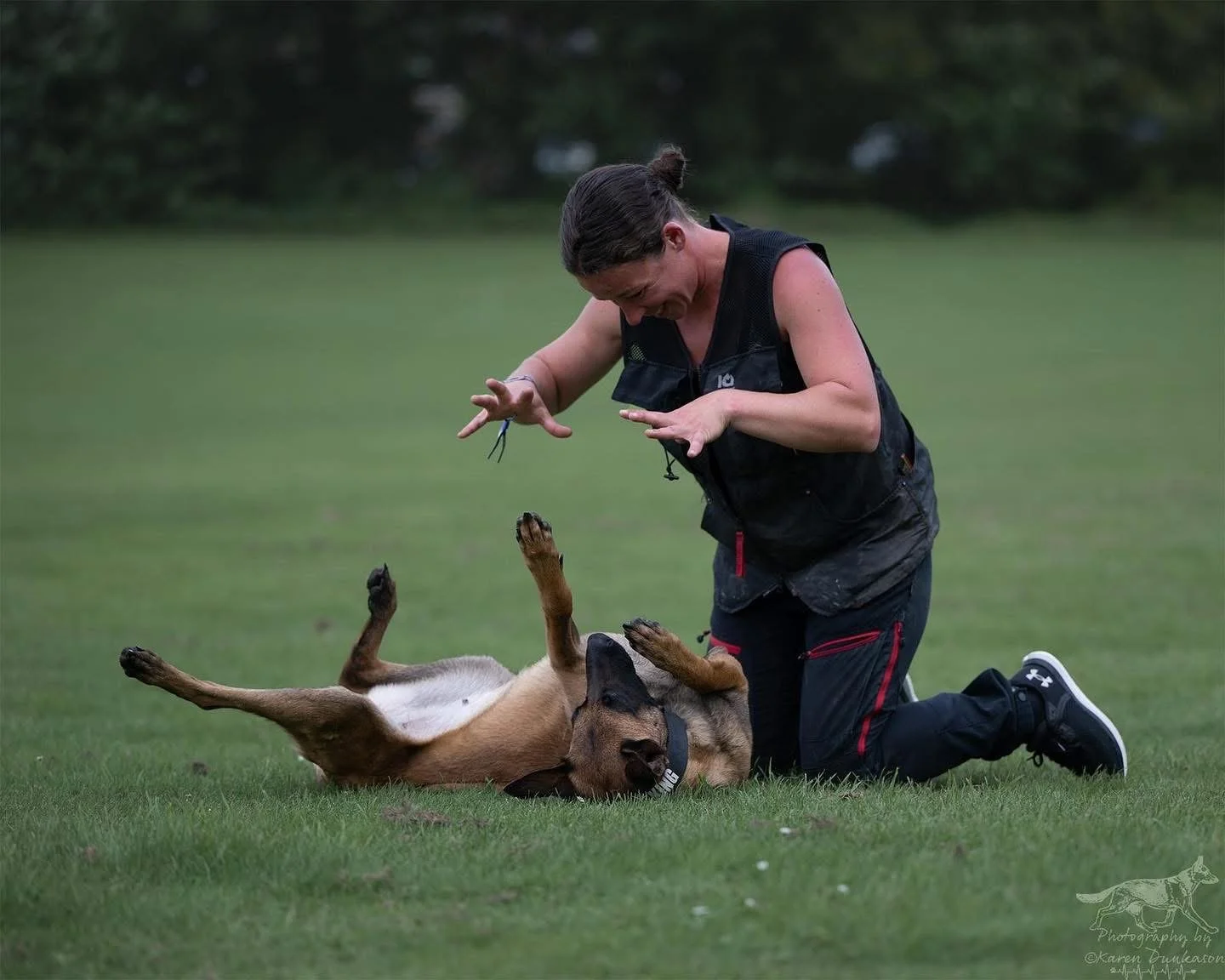
Image Courtesy of Karen Dunkason
You can run the same exercise, use the same reward, give the same cue—
and get completely different results depending on what sits underneath it.
Tension.
Frustration.
Clarity.
Enjoyment.
Intent.
Dogs are exceptionally good at reading this.
Not in a vague or mystical way—but in something very real and observable.
They adjust:
how quickly they respond
how much effort they give
how long they stay engaged
based on what they feel coming from you.
This is where a lot of training quietly breaks down.
Because on the surface, everything looks correct.
The handler is doing the right exercise.
Using the right rewards.
Following the right steps.
But the dog is flat.
Or hesitant.
Or just… not quite in it.
And the answer usually isn’t more structure.
It’s better communication.
Not louder.
Not more animated.
But more congruent.
If you want engagement, your presence has to invite it.
If you want effort, your timing has to support it.
If you want the dog to stay in the work, the experience has to feel worth staying in.
This is what people try to bypass when they rush to control.
But control without emotional engagement is fragile.
It might hold together in quiet environments.
But under pressure, distraction, or uncertainty—it falls apart.
Because the dog isn’t truly in the work.
They’re just complying with it.
This is also where the difference lies between a dog that is working for reward, and a dog that values the work itself.
If the experience is right—if the communication is clear, consistent, and emotionally meaningful—the work stops being something the dog does for something else.
It becomes something they want to be part of.
Not because they’re being paid.
Because the work itself has become valuable.
When emotional communication is clear, everything changes.
The dog doesn’t just understand the task.
They want to be part of it.
And that’s where real training begins.