Want Before Control
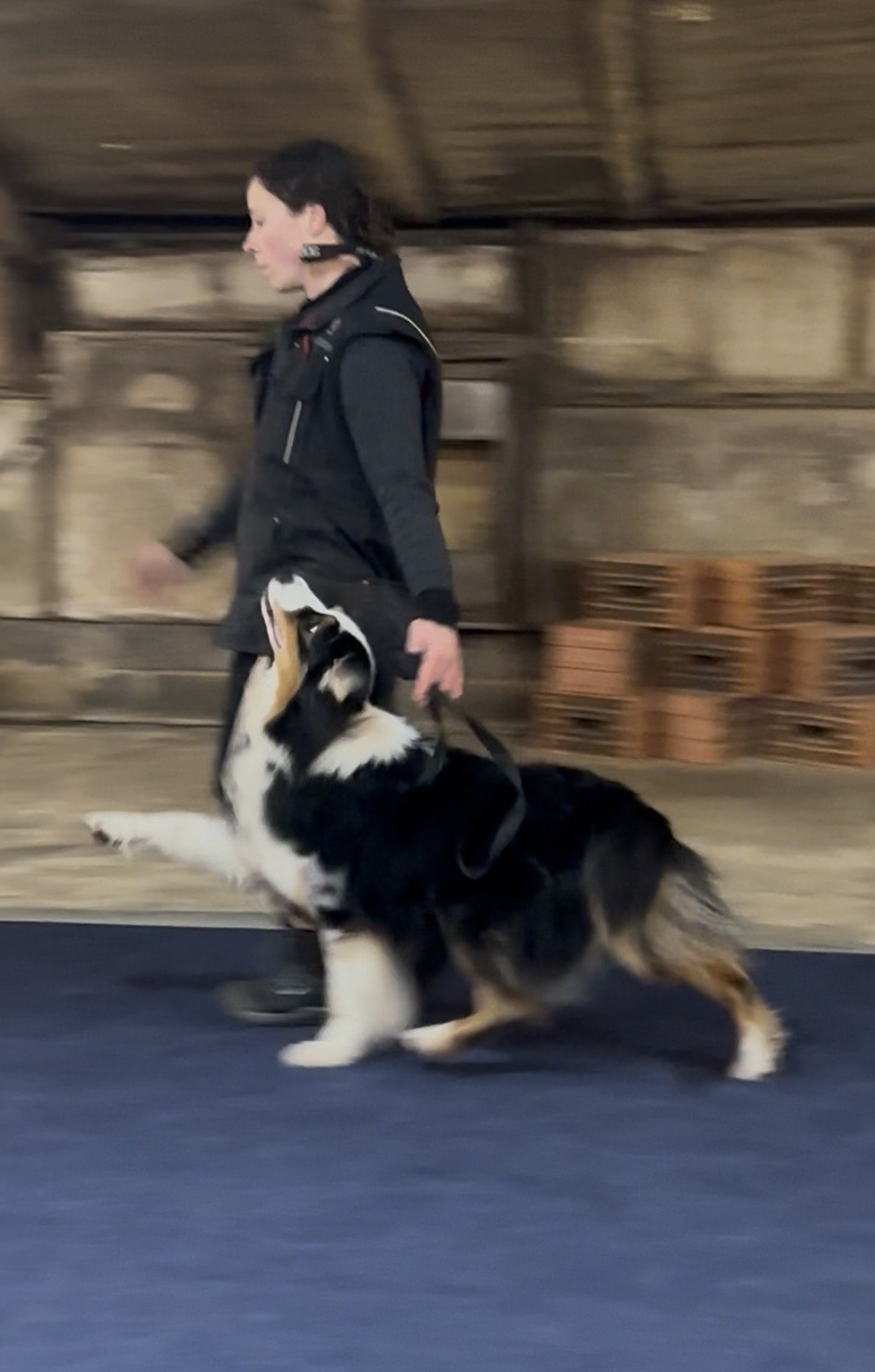
In dog sport obedience training, handlers are almost always in a rush to build control.
Control feels productive.
Control looks clean.
Control gives the impression that progress is being made.
But control is the easy part.
Building genuine drive, emotion, and willingness into an exercise?
That is far more difficult.
When I build foundations in obedience, I am not chasing precision. I am explaining the exercise to the dog and building the right emotional atmosphere around it. I want the dog to feel very, very good about what we are doing before I begin refining how it looks.
Take heelwork as an example.
In the foundation stages, I am far more concerned with creating genuine want to activate heelwork than I am with exact technical position. I want drive. I want animation. I want the dog to feel good stepping into that space beside me.
There are technical elements I remain aware of. When I halt, the picture includes the dog sitting. I expect that response, and when it’s there, I acknowledge it. If it’s not, I simply communicate and help the dog find the right answer. What I do not do is create tension around it.
I don’t allow the dog to be excessively forward. I keep them roughly where they should be. But I am not concerned with perfect straightness or exact alignment in the early stages. A little forward. A little crooked. That doesn’t trouble me.
If I demand exact placement too soon, the exercise becomes labour rather than expression.
People often worry that allowing imperfection early will create the wrong muscle memory and that it will never be correct later. In my experience, that isn’t true — provided the training is thoughtful and there are boundaries. There is a line. I won’t allow chaos. But I also won’t sacrifice emotion for aesthetics.
If a dog misses the sit at halt, I don’t freeze, stare, or create tension. I communicate. I ask again. And when they respond, we move forward positively. I will not let atmosphere deteriorate over early-stage errors.
Because atmosphere is the foundation.
If strong positive emotion is attached to a foundation behaviour, the dog develops an inherent desire to perform it. The exercise becomes something they want to do — not something they are doing in order to obtain a reward.
I still reward. Of course I reward. But relationship leads. Emotional communication builds the technical picture. Reward follows.
The atmosphere between us matters more than the mechanics in the early stages. When I reward, I put myself into it. The interaction, the engagement, the shared energy — that is as important as the food or the toy. I am not interested in creating a transactional dog who performs to earn something. I am building a dog who wants to participate with me.
If we become overly technical too early, we can create subtle pressure. The dog may comply. The dog may appear engaged. But internally, the exercise is no longer fun. It becomes something to get right rather than something to enjoy.
And later, this shows.
It shows when rewards are reduced.
It shows when criteria are raised.
It shows in the ring when the handler’s emotional state shifts under pressure.
If the foundation is built on want, we can raise criteria almost endlessly. If it is built on control, we eventually collide with a motivation problem.
Building want is not easy. It demands far more skill from the handler. When handlers are uncertain, they often default to control — because control feels safe and measurable. But control at the wrong stage creates passive dogs. It may make the handler feel effective, but it does not necessarily make the dog feel powerful.
Once a dog has genuine emotional investment in the work, then control can refine and strengthen performance. Used too early, it suppresses it.
Want must come before control.